
Santa Claus did not appear all at once in a red suit with a sleigh, a list, and a workshop at the North Pole. The Santa people know today grew from Christian tradition, European winter folklore, immigrant customs, American publishing, department store events, advertising, and generations of professional performers who learned how to make the character feel real in person.
That long history matters for anyone hiring a Santa today. A strong Santa visit is not just a costume. It is a performance built on trust, warmth, timing, and a character that families already feel connected to before he walks into the room.

Saint Nicholas: the real person behind the legend
The earliest roots of Santa Claus trace back to Saint Nicholas, a bishop from Myra in Asia Minor, in what is now Turkey. Nicholas lived during the third and fourth centuries and became known for generosity, protection of children, and quiet acts of charity. Stories about him spread through Christian communities for centuries after his death.
One of the best-known traditions says Nicholas helped a family in need by secretly providing gifts. Whether every detail of that story is literal history is less important than the theme that survived: help given privately, especially to children and families. That idea became central to the Santa figure.
How Saint Nicholas became part of winter traditions
As devotion to Saint Nicholas spread across Europe, different countries developed their own December customs. In the Netherlands, Sinterklaas arrived by boat, wore bishop’s clothing, carried a staff, and brought gifts to children. In parts of Germany and Central Europe, Saint Nicholas traditions mixed with local winter figures, gift givers, and moral stories about good behavior.
These traditions were not identical from country to country. Some were religious. Some were civic. Some were family customs passed through neighborhoods and towns. The common thread was a respected winter visitor associated with children, gifts, and moral imagination.
The name Santa Claus comes to America
Dutch settlers brought Sinterklaas traditions to New Amsterdam, later New York. Over time, the name changed in English speech and writing. Sinterklaas became Santa Claus. The American version began separating from the older bishop figure and moving toward the rounder, more cheerful Christmas visitor we recognize now.
Newspapers, poems, books, and illustrations helped the character spread. By the nineteenth century, Santa Claus had become a national cultural figure in the United States rather than only an immigrant tradition in one region.
The poem that shaped Santa’s Christmas Eve story
The 1823 poem commonly known as A Visit from St. Nicholas gave Americans many of the Santa details that still dominate Christmas Eve stories: a nighttime visit, a sleigh, reindeer, a chimney entrance, a sack of toys, and a cheerful figure who arrives while the household sleeps.
The poem did not invent every part of Santa, but it arranged the pieces into a vivid scene. It made Santa easier to picture, easier to retell, and easier for families to share with children.
Illustrators gave Santa a face
In the nineteenth century, illustrators made Santa more recognizable. Thomas Nast, one of the most influential political cartoonists of the era, drew Santa repeatedly for Harper’s Weekly. His drawings helped connect Santa with the North Pole, letters from children, toy making, and a more consistent visual identity.
Before mass illustration, Santa’s appearance varied widely. He could look thin, stern, bishop-like, elfin, or rustic. Printed illustrations gave families a shared version of the character. That consistency helped Santa become a figure children could recognize across books, stores, cards, and public events.
Department stores turned Santa into a live experience
By the late nineteenth and early twentieth centuries, department stores began using live Santa appearances to draw families during the Christmas shopping season. This changed Santa again. He was no longer only a story, a poem, or an illustration. He became someone children could meet.
That shift created the foundation for modern professional Santa work. A live Santa needed more than a suit. He needed presence, patience, a good voice, clean timing, and the ability to handle excited children, nervous children, parents, cameras, and busy public spaces.
The red suit became the standard
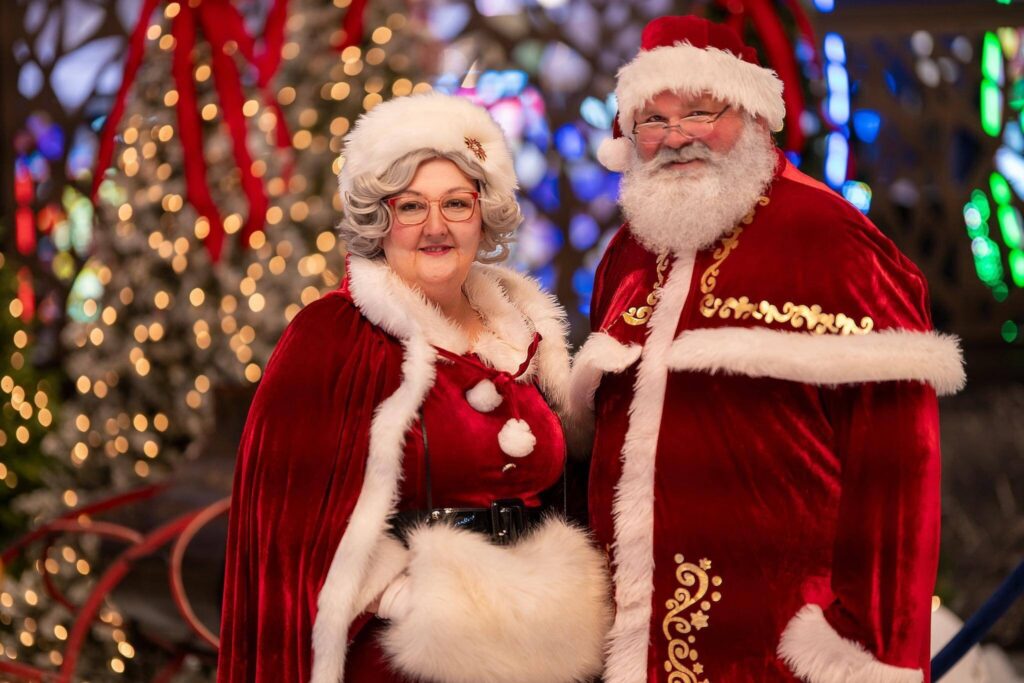
Santa’s red suit became dominant through a mix of illustration, retail display, greeting cards, and advertising. The red coat, white trim, black belt, boots, full beard, and warm expression became visual shorthand for Christmas itself.
Popular advertising in the twentieth century reinforced that look, but it did not create Santa from nothing. The modern image worked because it built on older stories that were already familiar. Advertising standardized Santa’s appearance. It did not replace the deeper tradition of generosity and wonder behind the character.
Professional Santas carry the story forward
Today, Santa appears at malls, corporate parties, tree lightings, schools, private homes, city events, resorts, parades, and photo experiences. The best performers understand that they are stepping into a character families care about deeply. They protect the illusion without making the event feel stiff or forced.
A professional Santa must read the room quickly. A toddler may need gentleness and distance. A corporate crowd may need polish and timing. A photo set may need consistency for hundreds of families. A private home visit may need storytelling, names, traditions, and a calmer pace.
Why Santa still works
Santa remains powerful because he connects several ideas at once: generosity, childhood, memory, family, surprise, and the feeling that the season is bigger than normal life. Parents remember meeting Santa when they were young. Children meet him with fresh eyes. Grandparents watch both at once.
That is why the character has survived so many changes in culture, media, retail, and technology. Santa adapts, but the emotional job stays the same. He gives people a way to make the holiday feel present, personal, and shared.
Hiring Santa today
When you hire Santa for an event, you are not just hiring someone to stand beside a Christmas tree. You are hiring someone to represent a tradition that has been shaped for centuries. The right performer understands the history, but more importantly, knows how to turn it into a real moment for guests.
ImSanta helps families, companies, venues, and organizations book professional Santa talent for events across the United States. For city-specific availability, start with our pages for professional Santa Claus in New York, Santa Claus performers in Boston, and hire Santa in Philadelphia. You can also contact ImSanta for help matching the right performer to your event.